REVIEW · WIELICZKA
Krakow: Schindler’s Factory, Jewish Ghetto & Salt Mine Tour
Book on GetYourGuide →Operated by Kraków Explorers · Bookable on GetYourGuide
Seven hours, three landmark sites, one packed day. I love the Schindler’s Factory Museum guided storytelling and how you can still read the tragedy in the street-level details around the Empty Chair Monument. The trade-off: this is a tightly run group day, so late arrivals can be a problem and you won’t have much time to wander off-plan.
This works well if you want one ticket day that connects World War II history to something you can physically see—walls, buildings, and a mine carved by hand over centuries. You also travel with a small group (up to 15) and an English-speaking live guide for the main historic parts, which keeps the pacing clear and the explanations focused.
One more consideration: the Wieliczka Salt Mine portion is self-guided, so it’s more about your pace underground than about a guide answering questions the whole time. If you prefer a fully guided day end-to-end, you may want a different format.
In This Review
- Key Things You’ll Experience on This Day
- Entering Schindler’s Factory: A Museum Guide That Puts Faces to History
- Walking the Former Jewish Ghetto (Podgórze) and Finding the Remaining Evidence
- Empty Chair Monument and Heroes’ Square: Why This Stop Hits Hard
- From Krakow to Wieliczka: How the Salt Mine Fits the Second Half
- Inside Wieliczka: 340 Meters Down and 245 Kilometers of Tunnels
- Practical Pacing for a 7-Hour Day: What Feels Smooth vs. What Doesn’t
- Price and Value: Is $147 Worth It Here?
- Who This Tour Suits Best (and Who Should Think Twice)
- Should You Book This Krakow Combo Tour?
- FAQ
- What language is the tour guide?
- How large is the group?
- Is Schindler’s Factory guided, or do I visit on my own?
- Do I need to buy tickets for the museums or salt mine?
- Is food provided during the tour?
- Will I explore the Wieliczka Salt Mine with a guide?
Key Things You’ll Experience on This Day
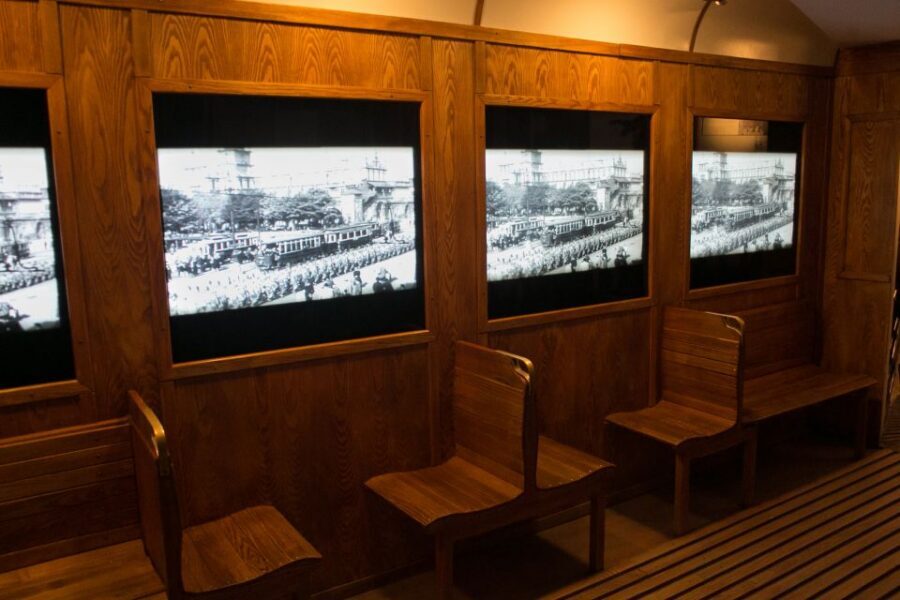
- Schindler’s Factory museum visit led by a licensed guide
- Podgórze walk through the former Jewish Ghetto, including the remaining wall segment
- Heroes’ Square Empty Chair Monument, with its symbolic 68 chairs
- Under the Eagle pharmacy stop, tied to ghetto-era daily life
- Wieliczka Salt Mine entry plus a self-paced route through 20 halls
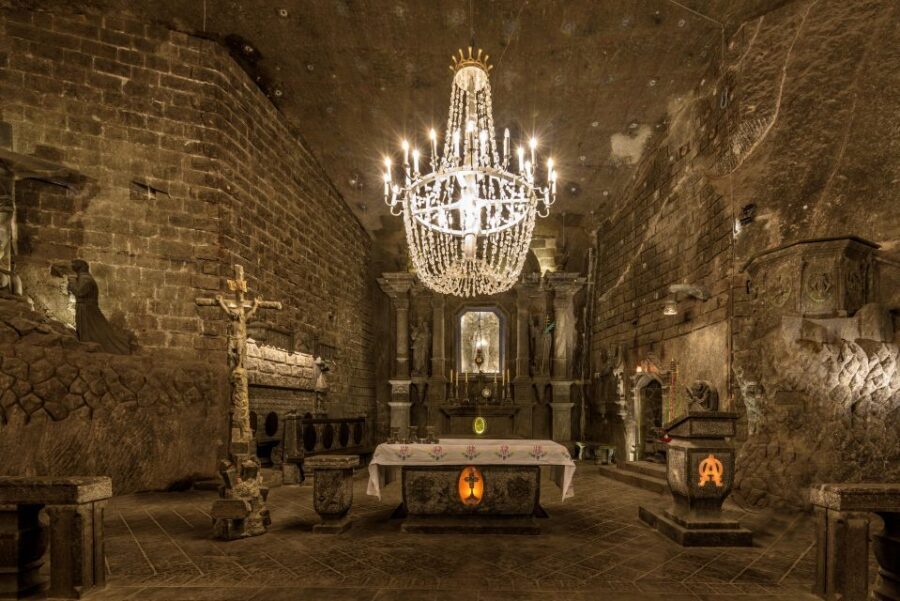
- St. Kinga’s Church in salt, with chandeliers and saint sculptures carved from salt
Entering Schindler’s Factory: A Museum Guide That Puts Faces to History
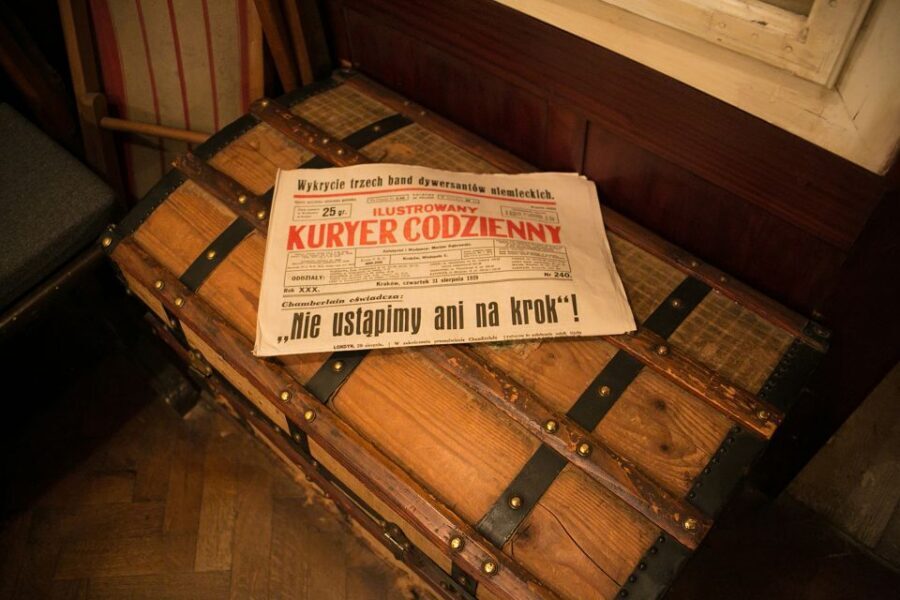
Your day starts at the Oskar Schindler’s Enamel Factory Museum. Your guide meets you right there, holding an excursions.city sign, and the group keeps a strict schedule. This is one of those tours where arriving on time really matters, because museum entry is punctually timed and late arrivals can’t be slid in.
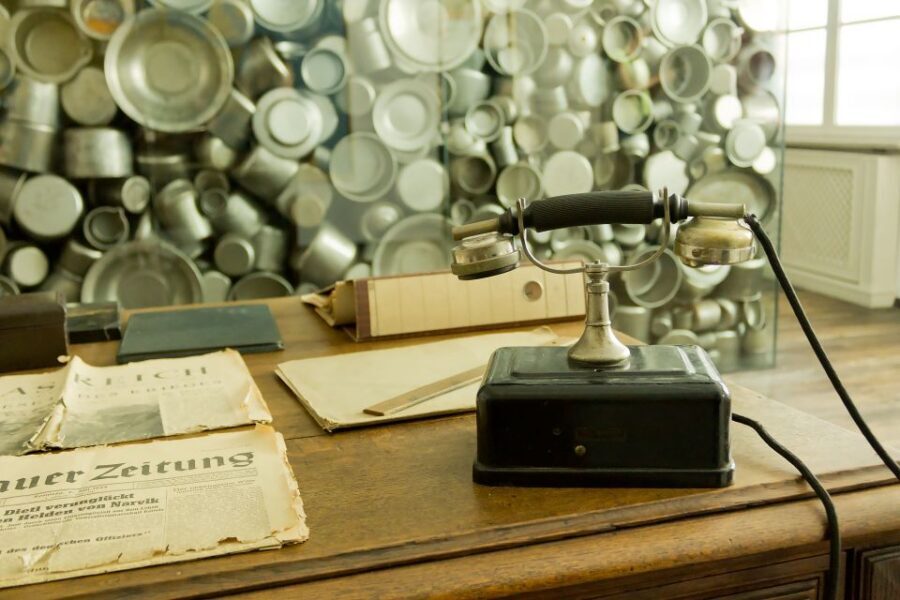
Inside Schindler’s Factory, you’ll get a licensed museum guide using the exhibits to explain what happened and why it mattered. The factory is closely tied to Steven Spielberg’s Oscar-winning film Schindler’s List, but the museum approach is practical: you learn the story of a German entrepreneur who helped many Jews during the war.
What I like about this setup is that you’re not just staring at information panels. A good museum guide helps you connect dates and names to what you see on the walls. It also keeps the visit from feeling like a random checklist, which can be a risk when you’re moving through a heavy subject on your own.
Other Schindler's Factory combo tours in Wieliczka


Walking the Former Jewish Ghetto (Podgórze) and Finding the Remaining Evidence
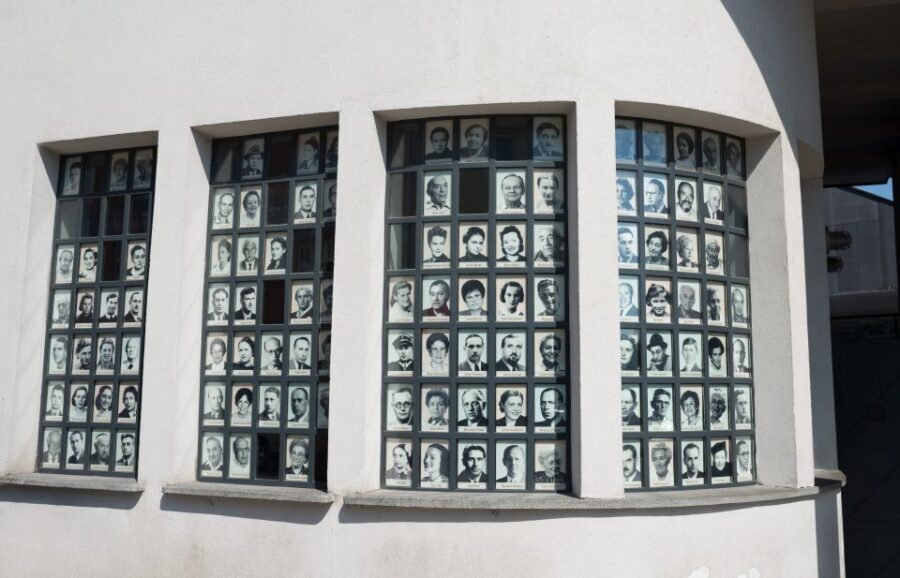
After the museum time, the tour shifts to the streets of Podgórze. This is where the tour earns its emotional power, because you’re walking in a place shaped by what occurred during the Second World War. You’ll see parts of the ghetto’s boundary—specifically an undestroyed wall segment—and you’ll also pass houses that once held thousands of displaced Jews.
The route is designed to show not only the scale of what happened, but also the everyday reality of the ghetto environment. You’ll stop at the Under the Eagle pharmacy, and that matters because it reminds you this was not just a concept or a map. It was daily life, repeated in buildings and streets that were still standing long enough to become part of the historical record.
One of the most striking moments is in Heroes’ Square, where you’ll find the Empty Chair Monument. The monument’s symbolic 68 chairs are meant to represent lives lost, and standing there makes the history feel less abstract than it does in a book. If you want history with physical anchors—walls, buildings, monuments—this ghetto walk gives you that.
Empty Chair Monument and Heroes’ Square: Why This Stop Hits Hard
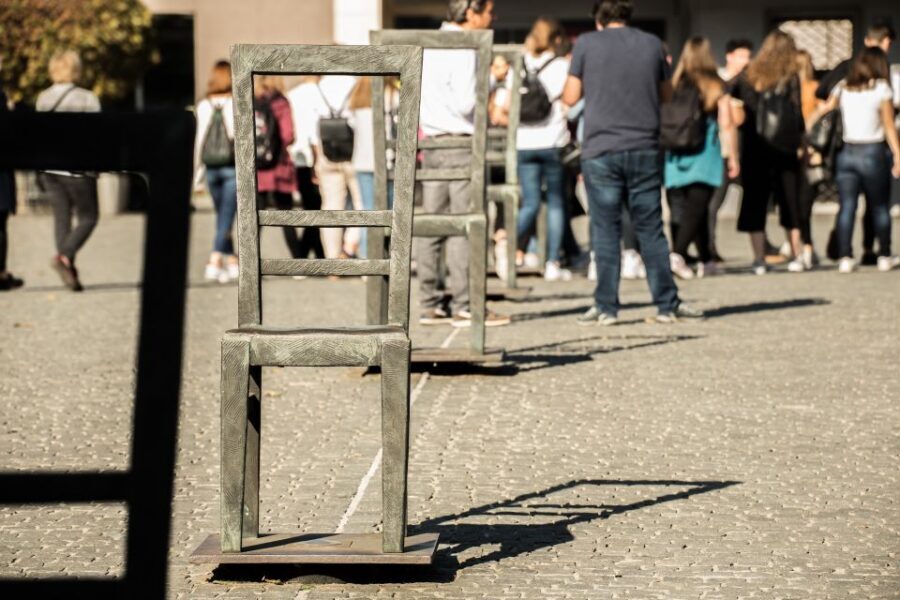
This is not a “quick photo moment” stop. The monument is specifically placed and designed to make you pause. When you stand among the chairs in Heroes’ Square, the symbolism does most of the work for you, especially if you’ve already heard the story at Schindler’s Factory.
I also like that the tour doesn’t rely only on one dramatic element. It combines the Empty Chair Monument with street-level evidence, including the remaining wall and the houses you can still identify as part of the ghetto area. That pairing helps you understand the monument as a response to something real—not just a standalone memorial.
The main drawback to be aware of is emotional weight. This section is about persecution and displacement, and the walking portion can feel intense even if you keep moving. Go in with the mindset that you may need a minute after key stops to reset.
From Krakow to Wieliczka: How the Salt Mine Fits the Second Half
In the second half of the day, you’ll be driven from Krakow to Wieliczka. The town is only about 10 kilometers from Krakow, so this doesn’t feel like a huge detour. It’s a smart change of pace: the tour shifts from human history above ground to a massive underground world shaped by centuries of labor.
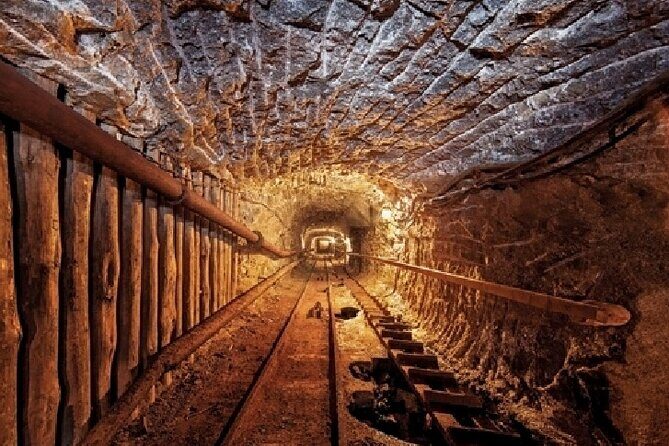
Once you arrive, you’ll visit the Wieliczka Salt Mine—one of the largest old salt mines in Europe—and explore it at your own pace without a guide. That self-paced format is a deliberate choice. After a guided historic walk, you get space to set your own rhythm underground.
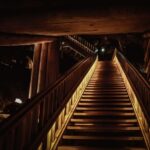
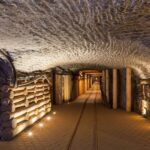
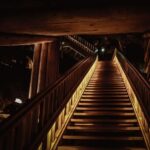
You’ll also be walking a route of more than 3 kilometers through the mine, with 20 halls along the way. That’s long enough to feel like a real journey but not so long that you can’t stop when you want to. If you’re the type who likes photos, there will be plenty of chances underground to pause and look around.
Inside Wieliczka: 340 Meters Down and 245 Kilometers of Tunnels
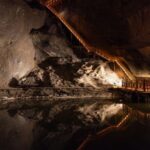
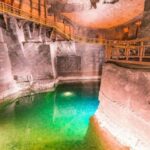
The Wieliczka Salt Mine experience is built on scale. The mine reaches a depth of 340 meters, and the total length of corridors and tunnels is over 245 kilometers. You don’t have to memorize those numbers, but knowing them helps you appreciate what you’re walking through.
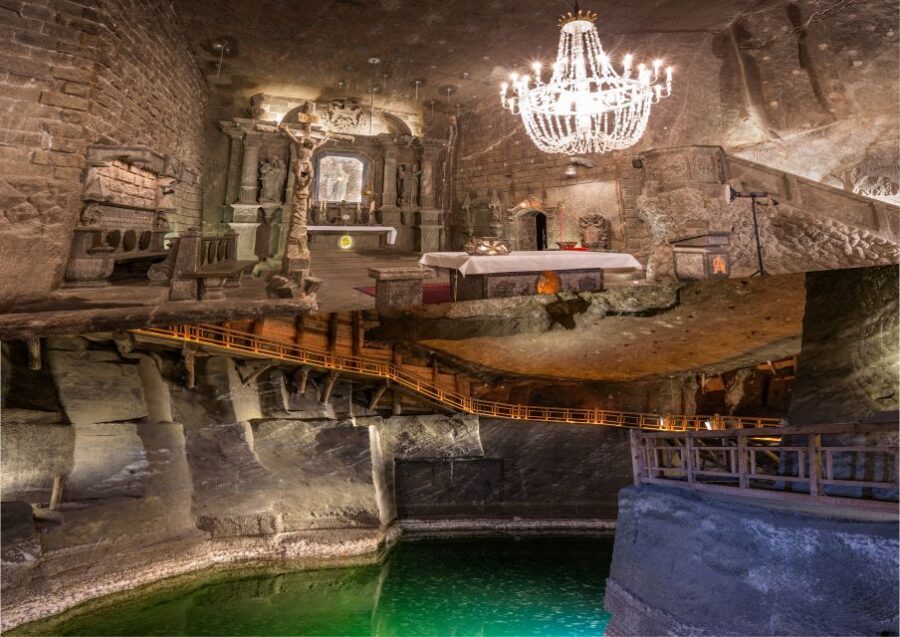
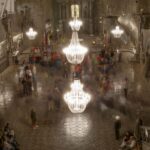
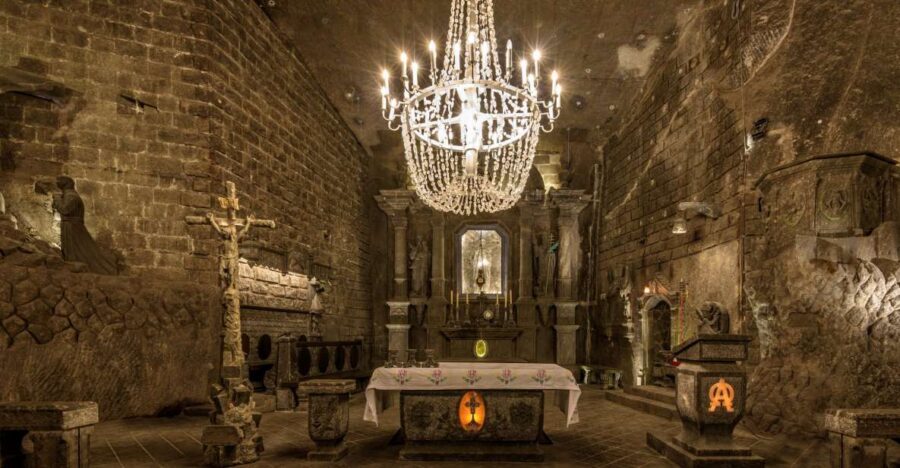
The route features 20 halls, including the largest called St. Kinga’s Church. Named for the patroness of miners, this is one of the mine’s big highlights because it’s a functioning-feeling space carved from salt. You’ll be able to admire the underground church interior, including chandeliers and sculptures of saints carved out of salt.
This is also where the mine starts to feel less like an attraction and more like a world. Salt becomes architecture—ceilings, walls, and detailed shapes. And because it’s all carved, you can mentally picture the work needed to create something this intricate deep below ground.
One more interesting angle you’ll learn during the mine visit: the mine has a special curative microclimate, and you’ll hear about the sanatorium located 135 meters below ground. Even if you don’t buy every wellness claim personally, it’s a valuable slice of how people used the mine’s environment over time.
Practical Pacing for a 7-Hour Day: What Feels Smooth vs. What Doesn’t
This is a 7-hour tour, so it’s built to pack three major stops into one day. I like that structure when I’m short on time in Krakow and want maximum payoff per day. It’s also ideal if you don’t want to coordinate multiple separate tickets and transport arrangements.
The most important thing to understand is pacing differences. The Schindler’s Factory and the ghetto walk are guided and structured, so you follow the guide’s timing. The mine is self-paced, which means your flow is more up to you, but you still have to meet the group’s overall day structure.
Food is not included. That’s worth planning around, especially because the subject matter is heavy and the mine requires active walking. If you arrive hungry, you’ll feel it more than you expect.
Price and Value: Is $147 Worth It Here?
At $147 per person, you’re paying for a bundle: museum tickets for Schindler’s Factory and Wieliczka Salt Mine, a licensed museum guide for the main parts, and transportation between Krakow and Wieliczka. You’re also getting skip-the-ticket-line entry, which matters when you want your schedule to stay intact.
Whether it feels like a good value comes down to what you’d otherwise do. If you planned to visit Schindler’s Factory with a guide, then add the ghetto walk, then go to Wieliczka, you’d likely spend similar money across separate bookings—plus you’d still need to coordinate timing and transport. Here, the tour does that for you in one schedule.
The small-group size (limited to 15 participants) is another value point. In crowded cities, big groups can make guides less personal. Here, the format is set up so explanations can stay clear and you’re not constantly losing track of the meeting point.
Who This Tour Suits Best (and Who Should Think Twice)
This tour is a strong fit if you want a first-time Krakow day that covers major World War II sites and ends with a completely different kind of underground experience. I’d especially recommend it if you like your history grounded in locations you can walk past, not only in museums.
It also suits people who are comfortable with self-paced sightseeing underground. You’ll get to move through the mine when you want, without being dragged from one hall to the next.
If you prefer a fully guided experience throughout—including inside the salt mine—you might find the self-paced section a little too free. Also, because the walking part involves emotionally serious sites, it’s best if you’re ready for a heavier tone, not just casual sightseeing.
Should You Book This Krakow Combo Tour?
Yes, I think you should book it if you want maximum meaning per day: Schindler’s Factory with a licensed museum guide, a focused walk through the former Jewish Ghetto sites in Podgórze, and a classic Wieliczka Salt Mine visit with St. Kinga’s Church and salt-carved details. The structure is efficient, and the small group size helps it stay readable.
If your top priority is relaxing, slow travel, you may want a different option. This is a schedule-driven 7-hour day with strict timing, and the mine portion still involves a real walking route. But if you’re in Krakow for limited time and you want a well-connected route through two of the city’s biggest draws, this one makes a lot of sense.
FAQ
What language is the tour guide?
The live tour guide is available in English.
How large is the group?
The tour is a small group limited to 15 participants.
Is Schindler’s Factory guided, or do I visit on my own?
Schindler’s Factory is guided by a licensed museum guide.
Do I need to buy tickets for the museums or salt mine?
Admission tickets for Schindler’s Factory Museum and Wieliczka Salt Mine are included.
Is food provided during the tour?
Food and drinks are not included.
Will I explore the Wieliczka Salt Mine with a guide?
You explore the Wieliczka Salt Mine at your own pace without a guide. The route includes more than 3 kilometers and 20 halls.