REVIEW · WIELICZKA
Wieliczka Salt Mine: Fast-Track Ticket and Guided Tour
Book on GetYourGuide →Operated by KrakowTouring.com · Bookable on GetYourGuide
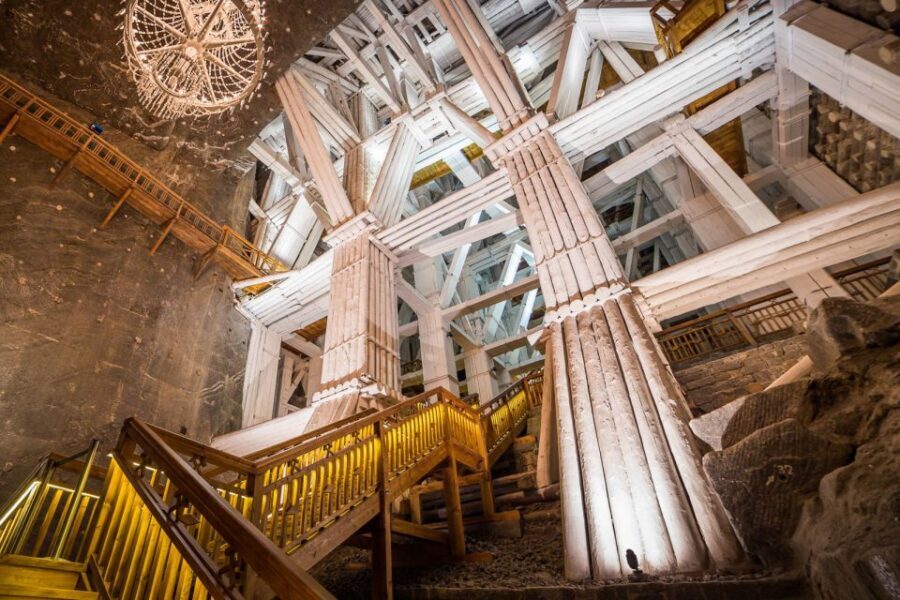
Salt underground can feel like science fiction. I love how the Wieliczka Salt Mine drops you 135 meters below the surface and turns a normal visit into something physical: chambers, altars, and that surreal salt architecture you can’t really picture until you’re there. The UNESCO-listed setting also helps—this is not just a tourist hole in the ground.
What really makes it work is the human touch of a licensed museum guide, plus the way the mine itself surprises you. I like the range of scenes—excavated holes, galleries, ramps, lakes, chambers, and shafts—especially since the salt isn’t the expected bright white. It comes in naturally different gray shades, like rough granite. One drawback to keep in mind: timing and pacing can feel strict. The exact start time is confirmed the day before, and if a guide is delayed or your group is slowed by others, your tour flow can change.
In This Review
- Key Takeaways: What Matters Most
- Why Wieliczka’s Salt Mine Feels Different From Other Underground Sights
- Price and Value: Is $67 Worth a 150-Minute Guided Descent?
- Meeting Point and Start-Time Reality by the UNESCO Sign
- Going Down: 800 Steps, 14–16°C Air, and What to Wear
- Inside the Mine: Galleries, Lakes, Salt Altars, and the 2.5-Kilometer Walk
- Your Licensed English Guide: How the Tour Stays on Track
- Timing, Group Size, and the End-Game Elevator Ride
- Who This Tour Suits Best (and Who Should Skip It)
- Should You Book This Fast-Track Guided Tour?
- FAQ
- How long is the Wieliczka Salt Mine fast-track guided tour?
- How far underground does the tour go?
- About how many steps are there?
- Is an English-speaking guide included?
- Where do I meet for the tour?
- What should I bring?
- Is this tour suitable for wheelchair users or mobility impairments?
Key Takeaways: What Matters Most
- Fast-track entry helps you skip the ticket line and get moving faster.
- You’ll be 135 meters underground and face around 800 steps to reach the mine.
- Expect a guided route of over 2.5 kilometers through chambers and salt-built features.
- The mine uses a working-era vibe: you’ll ride back in the original miner elevator.
- The salt look is gray-toned, not snow-white—think granite textures and salt sculpture work.
- English tours include a licensed guide, but the narration style and pace can vary.
Why Wieliczka’s Salt Mine Feels Different From Other Underground Sights
Wieliczka isn’t just “an underground tour.” It’s an entire underground world that’s been carved and used for a long time, and you feel that in every turn. The mine reaches 327 meters down and stretches across 287 kilometers through corridors and chambers. That scale matters because the tour doesn’t feel like a single room with a few photo stops. Instead, you keep moving through distinct underground spaces, each with its own vibe.
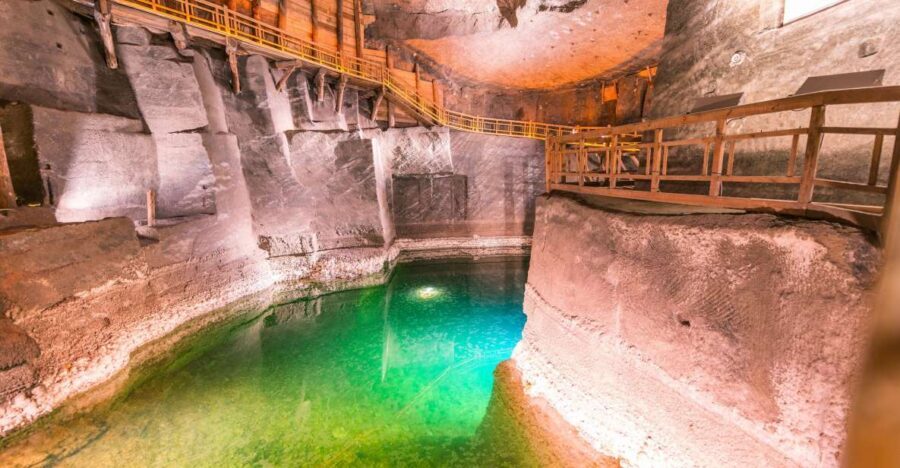
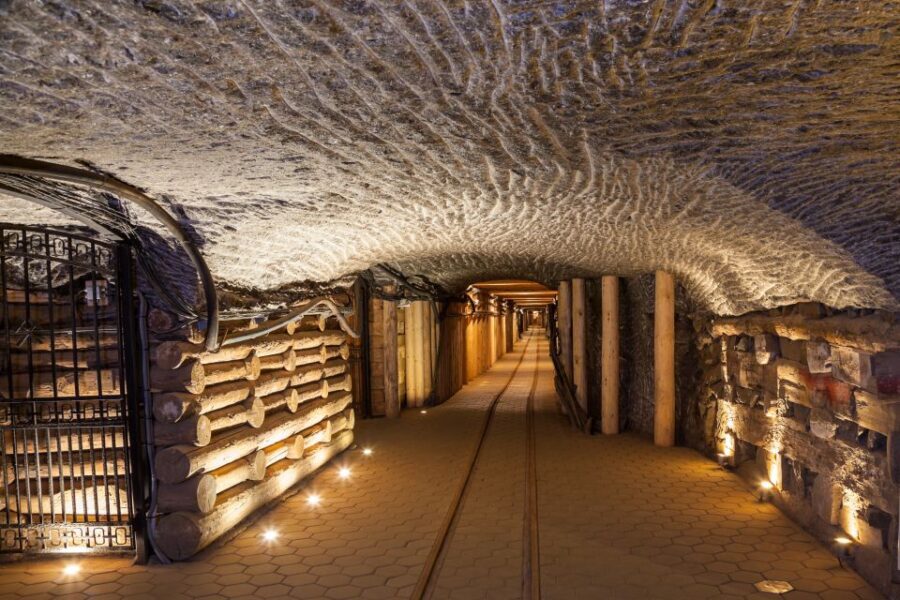
One of the first things I’d point out is the color. You might picture bright white salt like a kitchen container. Here, the rock salt comes in multiple gray shades—more like rough granite than clean, crystalline snow. It makes the chambers feel older and more rugged. The effect is also practical: gray salt reads well in low light, so the underground spaces don’t look flat or dull.
Also, the mine is UNESCO-listed, which usually means the site has serious conservation behind it. In practical terms, you’re not wandering through a random attraction. You’re following a guided route designed for this specific underground environment—depth, stairs, and all.
Other skip-the-line and fast-track tickets in Wieliczka
Price and Value: Is $67 Worth a 150-Minute Guided Descent?
At $67 per person, this is not the cheapest outing in Kraków’s orbit—but it’s also not “paying for nothing.” You’re paying for four main things:
- A fast-track entrance ticket (skip the ticket line).
- A licensed guide from the Salt Mine Museum (English-speaking).
- Local tour leader assistance to help you find your group and enter smoothly.
- A booking fee included in the total.
What you’re not paying for is also clear: no food, no drinks, and no transportation to or from the museum, plus no parking fee. So if you’re choosing between this and a cheaper ticket without guidance, ask yourself what you want. If you like history, mining context, and understanding why specific salt spaces exist, the guide value shows up quickly.
If you’re mostly chasing photos, you might feel the cost more sharply. One reason: the tour includes a structured walking route—plus those steps—so you’ll trade some freestyle time for a guided narrative. For me, the “value” logic works best if you want the mine to make sense, not just look cool.
Meeting Point and Start-Time Reality by the UNESCO Sign
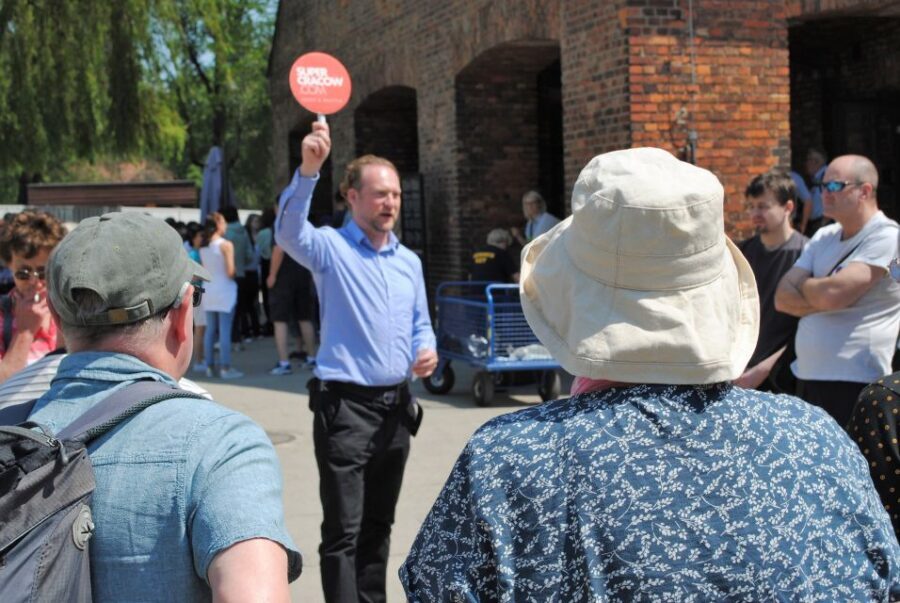
Plan to arrive at least 15 minutes early in front of the UNESCO sign close to the Salt Mine Museum. That isn’t busywork; it’s your insurance against lost time. You’re joining a group, and your host will help you find your tour party and enter the museum.
One thing to know: you’ll choose your preferred start time, but it isn’t guaranteed. You’ll be informed about the exact start time the day before. I like that they’re giving you a heads-up, but it does mean you should keep your schedule flexible that day.
Also, this is the kind of tour where small delays compound. If a guide is running late, you feel it fast because you’re about to start descending, and the mine schedule is the schedule. In past groups, late arrivals at the meeting point have caused time shifts, so give yourself buffer time for the meetup area.
Going Down: 800 Steps, 14–16°C Air, and What to Wear
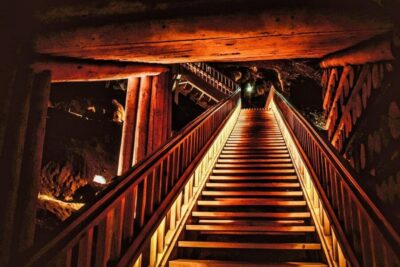
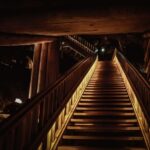
This is an active underground visit. The tour takes place 135 meters below the surface and includes about 800 steps overall, with around 400 steps at the beginning. That first chunk is the one that catches people off guard. Even if you’re “okay walking,” stairs underground feel different because your pace changes and your breathing gets louder.
Temperature is another practical factor. Underground, it’s typically 14–16°C. That doesn’t sound extreme, but you’ll be down there long enough that comfort matters. Wear layers if you run cold.
Your packing rules are straightforward:
- Bring comfortable shoes.
- No oversize luggage
- No baby strollers
- No smoking
- No alcohol or drugs
And yes, this matters: it’s not suitable for people with mobility impairments or wheelchair users. If walking on stairs is hard for you, pick a different kind of mine visit.
If you want a simple “show up ready” approach: wear closed-toe shoes with good grip, skip bulky bags, and plan to move at the guide’s pace.
Inside the Mine: Galleries, Lakes, Salt Altars, and the 2.5-Kilometer Walk
Once you’re down, the tour rhythm becomes: walk, stop, listen, then walk again. Sightseeing takes up to 3 hours on the clock, even though the tour is listed at 150 minutes—so build in some buffer for the waiting and transitioning underground.
Here’s what you should expect to see:
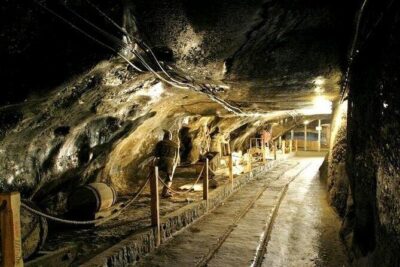
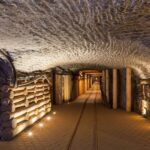
- Galleries and ramps: You’re moving through excavated routes, and the slope changes how you experience the space. It’s not just flat “corridor sightseeing.”
- Holes, shafts, and chambers: These sections show how the mine is structured vertically and horizontally. The mine’s working logic becomes visible.
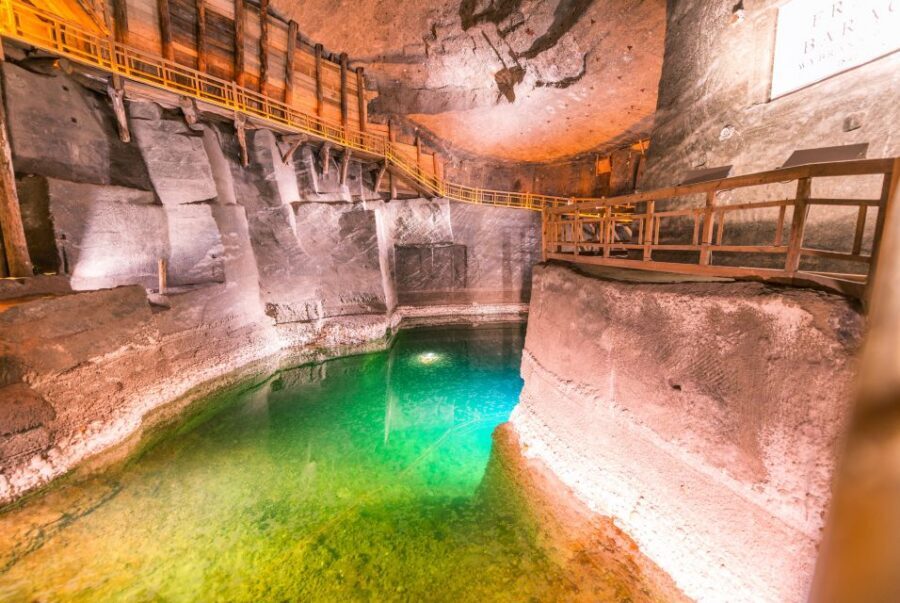
- Lakes: Water deep underground changes the mood. It also helps explain why the mine is more than “a tunnel.”
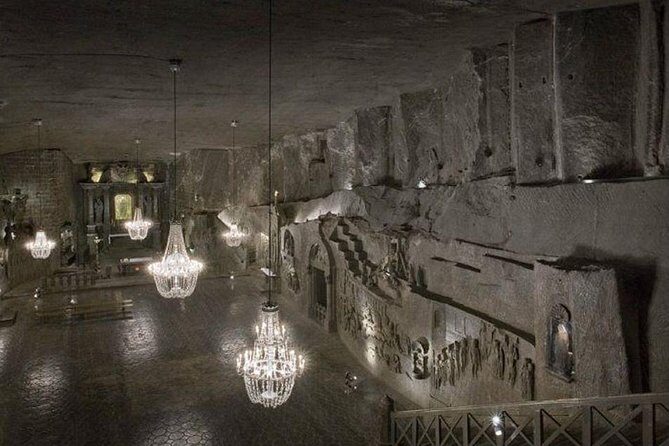
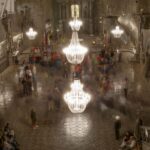
- Sculptures and chambers made from salt: This is one of the signature pulls. The salt-built features are the part people remember, because they turn industrial extraction into art-like spaces.
- Churches and altars made of salt: These are the places where the scale and craftsmanship really land. Instead of mining artifacts alone, you’re shown how the salt environment can create something reverent.
The tour also includes a bit of “how it works” mining context. Some groups find the narration leans more toward the mining side than the art side. If you’re the type who loves quarrying detail, you’ll likely appreciate that balance. If you’re mainly chasing cathedrals and sculptures, you might wish the tour lingered longer in those spaces.
One more detail I like: the mine walk includes more than 2.5 kilometers underground. That’s not a quick walk-through. It’s enough distance that you feel like you traveled, not just visited.
Your Licensed English Guide: How the Tour Stays on Track
A big plus is that the tour includes a licensed guide provided by the Salt Mine Museum, with English spoken during the tour. That’s a meaningful difference between a generic audio tour and a live guide who can answer questions.
I also think the guide style affects how you experience the mine. In one English tour, a guide named Paulina was described as very businesslike and strict about timing—pushing the group to leave quickly at the end. That’s not automatically bad; it can keep things orderly. But if you’re the type who likes to linger after the final stop, that stricter approach can feel a bit tight.
Similarly, narration clarity can vary. In past groups, some guests felt the guide’s delivery could be monotonous or hard to hear at moments. If you know you struggle to catch spoken English in a busy setting, you’ll want to pick a spot where you can see and hear well, and don’t be afraid to ask questions early.
The upside: when the guide explains what you’re seeing—ramps, chambers, altars—it clicks. You start understanding the mine as a living system, not just a set of rooms.
Timing, Group Size, and the End-Game Elevator Ride
Even with fast-track entry, underground tours can get shaped by group flow. If a group in front moves slowly, you may spend some time waiting at stations so you can proceed together. One reason to keep expectations realistic: this isn’t a private tour, and the mine is built for controlled circulation.
For planning your day, here’s what I’d do:
- Arrive early so you start smoothly.
- Treat the tour as a “walk plus stops,” not a sprint.
- If you want souvenirs, don’t assume you’ll have endless time at the end.
The wrap-up includes a key moment: after the guided underground walk, you return to the surface in the original elevator used by miners. That’s one of those details that sounds like a gimmick until you’re actually there. It connects the site to the people who worked it, not just the visitors who view it.
Then it’s over—fast. If you want extra time in shops or for photos, you’ll need to keep an eye on how your group handles the final minutes. In some experiences, guides pushed leaving immediately so they could escort the group back to the start spot.
Who This Tour Suits Best (and Who Should Skip It)
This is a strong pick if you want a guided, structured way to see one of Poland’s most famous underground sites. You’ll get the UNESCO context, live explanations, and a route that covers salt mining spaces rather than only one or two “star” stops.
It’s also a good fit if you enjoy physical travel. The stair count is real, and the temperature is real. You’ll feel like you earned the photos.
But it’s not for everyone:
- Not suitable for wheelchair users and people with mobility impairments.
- You should be comfortable with hundreds of steps—especially the first half.
- You’ll want comfortable shoes and a steady walking pace.
If you’re traveling with kids, note that baby strollers aren’t allowed, so you’ll need a stroller-free plan. If you’re coming with lots of luggage, leave it behind—oversize luggage isn’t allowed.
Also, smoking and alcohol/drugs aren’t allowed. So yes, keep it clean and follow the rules for an underground environment.
Should You Book This Fast-Track Guided Tour?
I’d book this if you want the mine to make sense. The combination of fast-track entry plus a licensed English guide is where the value lives. You’re not just buying access; you’re buying a guided route that takes you into the mine’s working spaces—galleries, lakes, chambers, and salt-built churches and sculptures.
I wouldn’t book it if you:
- hate stairs,
- need a very flexible pace,
- or want long, unstructured time for shopping at the end.
Also, keep your expectations aligned on group logistics. Even with fast-track, the mine visit depends on the flow of groups underground. That’s normal here. If you’re sensitive to strict timing, arrive early, and try not to plan anything right after.
Bottom line: if you can handle stairs and you like guided context, this $67 experience is a solid way to see the UNESCO salt miracle without wasting time in queues.
FAQ
How long is the Wieliczka Salt Mine fast-track guided tour?
The duration is listed as 150 minutes.
How far underground does the tour go?
The tour takes place 135 meters below the surface.
About how many steps are there?
There are around 800 steps, with about 400 steps at the beginning.
Is an English-speaking guide included?
Yes. The tour includes a live guide in English.
Where do I meet for the tour?
Meet in front of the UNESCO sign close to the Salt Mine Museum, and arrive at least 15 minutes early.
What should I bring?
Bring comfortable shoes.
Is this tour suitable for wheelchair users or mobility impairments?
No. It is not suitable for people with mobility impairments and it is not for wheelchair users.