REVIEW · KRAKOW
Wieliczka Salt Mine Best Value Shared Tour
Book on Viator →Operated by CRACOW LOCAL TOURS · Bookable on Viator
Salt under Krakow feels like another world. This shared tour takes you into the UNESCO Wieliczka Salt Mine, where centuries of carving turned underground salt into chapels, lakes, and massive chambers. I love how the guide connects what you’re seeing to the long working life of the mine.
What really makes it work is communication. You get an English-speaking guide plus headsets, so the story stays clear as you walk the tunnels. If you happen to get a guide like Tomas, you’ll likely feel the pacing stay smooth and focused.
The main thing to plan for is effort. You’ll handle lots of stairs and narrow underground passages, and it’s not a great fit if you’re dealing with claustrophobia or mobility limits.
In This Review
- Key highlights at a glance
- Why Wieliczka Salt Mine feels like more than a tour stop
- Pickup from Krakow: shared minivan comfort and realistic timing
- The descent and stairs: what 135 meters down really means
- Daniłowicz Shaft to St. Kinga Chapel: the route’s best sequence
- Salt lakes, chapels, and chandeliers: what makes the mine so photogenic
- English guide + headsets: how to hear the story without stress
- The underground workout: how long you’ll actually be moving
- Value check: is $76.63 worth it for the Wieliczka experience?
- Practical tips that make the day smoother
- Who this shared tour suits best (and who should reconsider)
- Should you book this Wieliczka Salt Mine best value shared tour?
- FAQ
- How long is the Wieliczka Salt Mine Best Value shared tour?
- Do I need to buy the entrance ticket separately?
- Is an English-speaking guide provided?
- What about pickup from Kraków?
- What walking and stairs should I expect?
- Can I cancel for free?
Key highlights at a glance
- Hotel pickup or central meeting point keeps your time in Krakow simple
- English-speaking guide + headsets helps you follow the history on the move
- 350-step descent and a long walking route (about 3 km) makes it a real mini-adventure
- Daniłowicz Shaft to the Chapel of St. Kinga gives you the “wow” stops early and often
- Salt lakes, carvings, and chandeliers show why this mine draws tens of millions
- Elevator back up ends the workout without making you repeat every step
Why Wieliczka Salt Mine feels like more than a tour stop
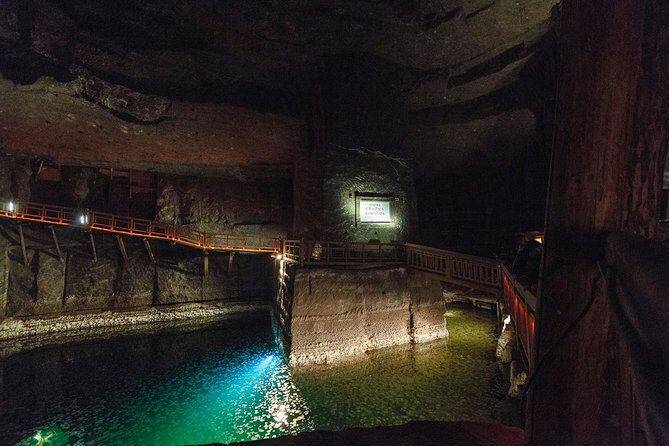
Wieliczka Salt Mine isn’t just a polished attraction. It’s an underground place with working-mines DNA: shafts, tunnels, chapels, and rooms that were shaped over centuries. Even if you’ve seen photos, the real thing has a different scale once you’re underground—height, depth, and the way everything looks carved from one material.
This tour gives you the classic tourist route, but the mine is so large that you’re seeing only a slice. That’s actually part of the appeal: it’s enough to leave you amazed, and it also makes you understand why the site has stayed a top draw for generations. You get a guided narrative as you go, not just a checklist.
And yes, it’s UNESCO World Heritage. The UNESCO status matters here because the site is preserved as a living historical monument, with carved religious spaces like the chapel of St. Kinga and dramatic underground spaces that still feel intentional, not staged.
Other shared and small group tours in Krakow
Pickup from Krakow: shared minivan comfort and realistic timing
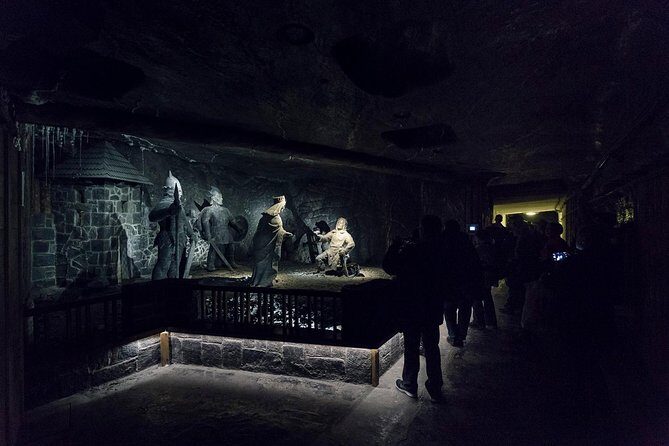
You’ll start midmorning with either pickup from select Kraków hotels or a central meeting point. Then you take a short drive out of town—about 10 miles (16 km)—to the mine. This is one of those “small logistics” choices that makes a half-day tour feel easier, especially if you don’t want to figure out public transport on a tight schedule.
The total experience runs about 4 hours (approx.), but most of your time is underground. Transfers vary with traffic, so I treat this as a schedule that’s flexible by nature. The good news is the mine route itself is well defined, and the plan is built around getting you back up when the tour ends.
Group size is kept fairly manageable. The site tours run in groups up to around 40 people, and this particular shared tour caps at about 35. That matters because it affects how much you’ll hear, how crowded the narrow corridors feel, and whether your guide can keep everyone together without rushing.
The descent and stairs: what 135 meters down really means
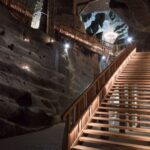
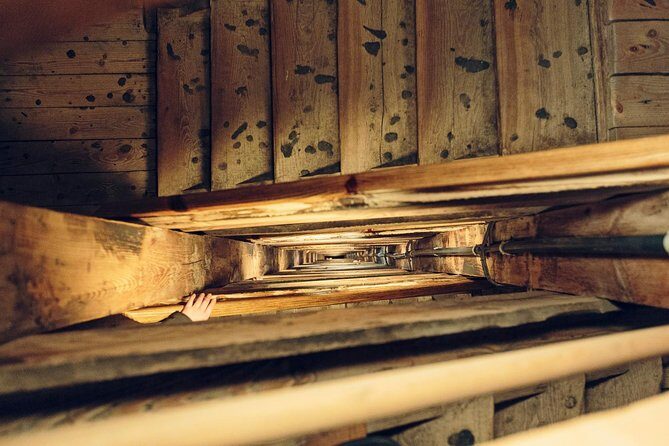
You’ll descend almost 450 feet (135 meters) underground. That’s not just a number—it changes how the whole experience feels, from your body to your senses. You’ll also do a climb-down workout along the route, with references ranging around 350 steps, plus a larger total stair count once you include the full sequence (the route is described as having roughly 800 stairs, with about 380 near the start).
So wear shoes you trust. Comfortable footwear isn’t a “nice to have” here; it’s how you stay relaxed while everyone else is doing the careful shuffle. Also keep an eye on your breath the first stretch. The descent is long enough that you’ll feel it, but it’s also set up to be safe and structured.
Temperature is another factor. Underground conditions run in the mid-teens, roughly 14–16°C on the route, and around 16–18°C through the year. It can feel cool when you start walking down and then warmer once you’re moving. A light layer helps you avoid that “why is it cold in here” moment.
Daniłowicz Shaft to St. Kinga Chapel: the route’s best sequence
One of the smartest things about this kind of guided format is the order of stops. You start at the Daniłowicz Shaft, where the guide brings the mine to life before you get lost in the tunnels. That start matters because it gives you mental anchors: what’s a shaft, what’s a chamber, and why salt mining shaped the spaces the way it did.
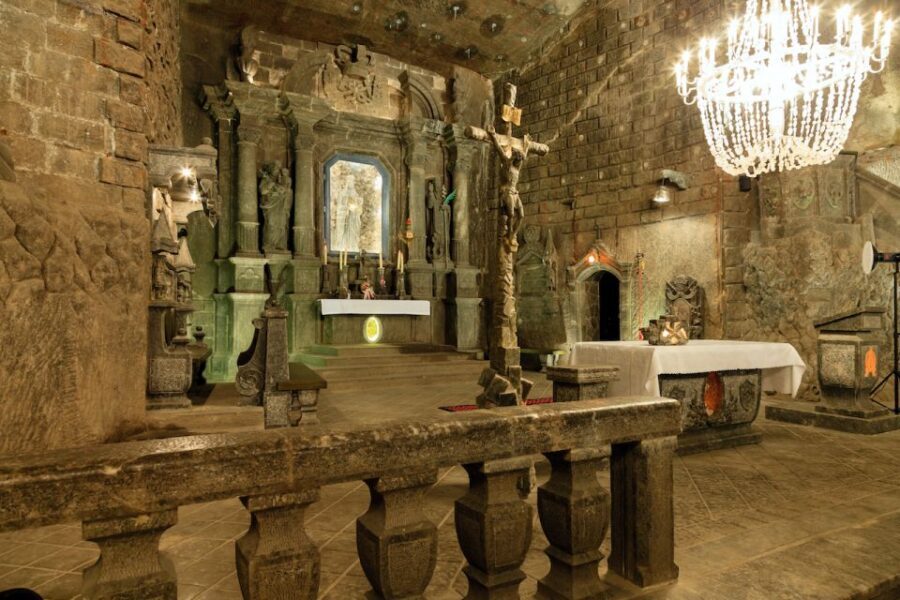
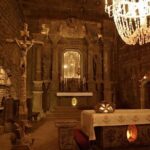
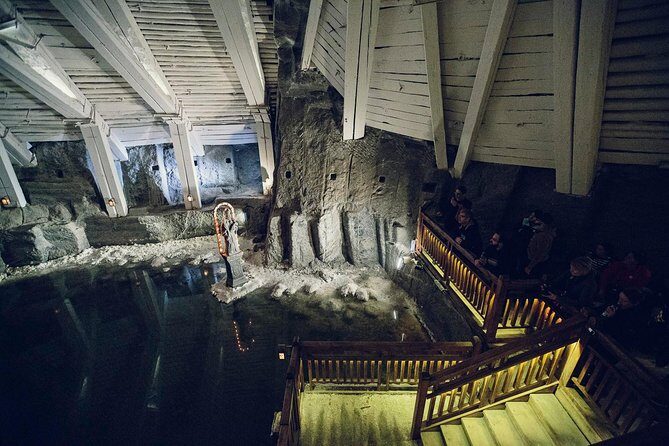
Then you move toward the Chapel of St. Kinga. This is one of the headline experiences because you’re looking at salt works of art—carvings and forms that look like sculpture rather than raw mineral. The chapel also connects the mine to the human side of survival and labor. It’s a great stop if you like history that feels lived-in rather than behind glass.
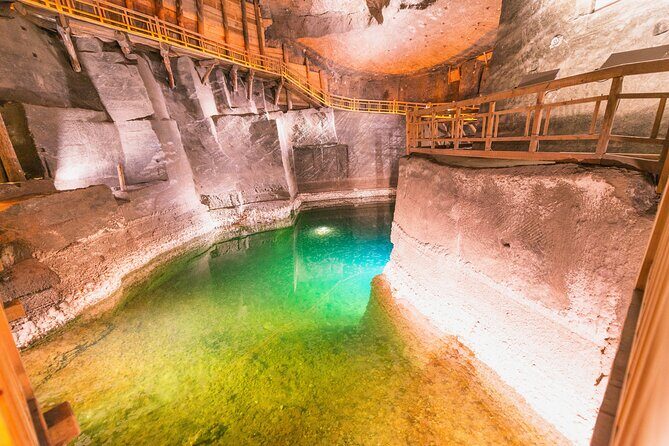
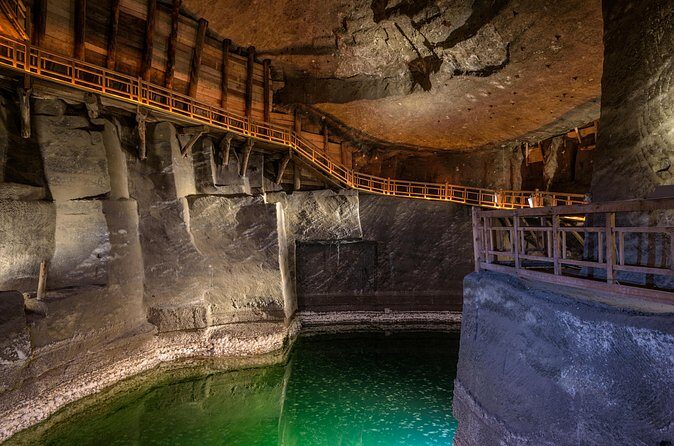
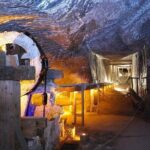
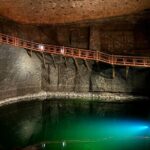
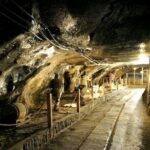
Along the way, you’ll pass saline lakes and see cavern spaces that look almost too big for something underground. The route is about 1.9 miles (3 km) of corridors, so you’ll keep moving and never feel like you’re standing around. That walking time is part of the payoff: it’s what lets your eyes adjust and notice details, like how salt carvings stay crisp even after all those years.
One practical note: passages can feel narrow and long, especially early on. That’s normal for this kind of underground site, but it can be uncomfortable if you’re sensitive to tight spaces. If claustrophobia is a concern, you may want to skip this tour type and look for a different visit format.
Salt lakes, chapels, and chandeliers: what makes the mine so photogenic
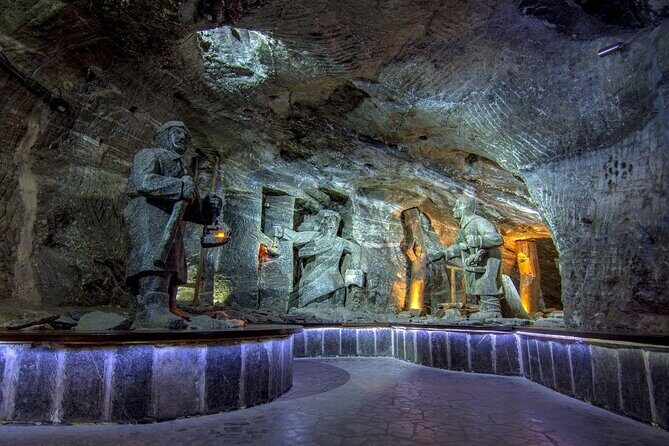
The mine is photogenic, but not in a generic way. The “wow” isn’t only the salt crystals; it’s the way the caverns are shaped into rooms with meaning. You’ll see glittering chambers, salt rock carvings, and areas with large open space that make you stop walking for a second just to take it in.
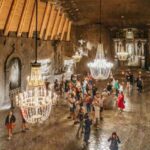
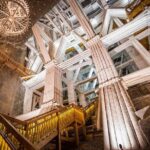
The chapel is the big art-and-religion moment, and it’s designed as a spectacle. Chandeliers in salt spaces are the kind of detail that makes you think someone planned a stage, not a mine. If you like architecture and craftsmanship, you’ll appreciate how intentional the design feels.
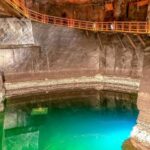
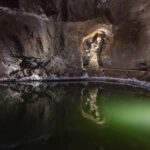
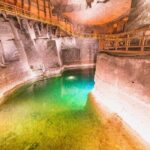
You’ll also encounter saline lakes. These add shine and movement in an otherwise still environment. It’s a reminder that salt mines aren’t just tunnels; they’re dynamic underground ecosystems shaped by centuries of water and mining.
The key value of having a guide is that you’re not only admiring scenery. You’re learning what each highlight represents and how the mine’s history connects to everyday life in the region. That turns your photos into something you can actually explain to others later.



English guide + headsets: how to hear the story without stress
This tour uses an English-speaking guide, described as a museum employee. The guide’s job isn’t just facts; it’s helping you understand what you’re seeing as you walk. Headsets are provided so the guide can speak clearly even in noisy groups and echoing tunnels.
From a practical angle, headsets are essential here. Underground acoustics can be tricky, and without them you’d spend the tour staring at other people and trying to guess what the guide is saying. The headsets are also why this feels like a guided experience rather than a self-guided walk.
One caution: radio buds may not work well for everyone. A few comments point out that hearing aids can make it harder to hear clearly through the provided audio setup. If you rely on hearing aids, consider bringing your own hearing equipment solution or going prepared to ask for help with headset fit on arrival.
Still, in general, the audio system is designed to keep everyone informed. When that works, it’s a huge upgrade to your experience—especially on a tour that’s mostly walking and doesn’t pause for long explanations.
The underground workout: how long you’ll actually be moving
You’re underground for about 3 hours, exploring the mine’s highlights and history. That’s long enough to build a rhythm, but not so long that you lose the thread. The tour covers key stops within the classic route, so you’re seeing major features rather than every single corridor.
The walking is a real consideration. Even though you’re going on a guided route, there’s no magic teleporting here—you’re climbing down, moving through tunnels, and taking in rooms step by step. Bags are also restricted: backpacks or bags larger than 30x20x10 cm aren’t allowed on museum grounds. The good part is you can store luggage in the vehicles free of charge.
If you’re deciding what to bring, pack like you’re going into a cool underground museum that also asks your legs to work. Bring a water bottle craving-free (bottled water is included), and bring only what you can manage comfortably while walking.
At the end, you don’t have to walk every step back. An elevator shaft whisks you up to the surface. That matters. It keeps the day from turning into a repeat of the descent and helps you enjoy your return to Kraków instead of limping home.
Value check: is $76.63 worth it for the Wieliczka experience?
At $76.63 per person, this shared tour can feel like a “midrange” option—especially for a half-day plan. What you’re paying for isn’t only entry. The price bundles the entrance ticket, a guide, transportation by air-conditioned vehicle, and bottled water.
That combination is where the value shows. Wieliczka is not a place you want to piece together on your own if you’re short on time. Getting the pickup and drop-off reduces hassle, and the entrance fee being included saves you from the time and decision-making friction of booking separately.
The shared format also matters for value. You’re not paying private-tour pricing, but you still get a professional guide, English commentary support via headsets, and a structured route that includes the big highlights. It’s a good choice if you want the essence of Wieliczka without spending a fortune or planning around group availability.
If you’re comparing options, I’d focus on what’s included rather than price alone. A tour that has entrance plus guide plus transport tends to make the day feel smoother, especially when you factor in limited time in Kraków.
Practical tips that make the day smoother
Here’s what I’d do if you want your half-day to feel easy instead of chaotic.
- Wear grippy shoes for the stairs and uneven tunnel surfaces.
- Dress in layers for the cool underground temperature (around the mid-teens °C).
- Keep your bag small (30x20x10 cm max) since larger items aren’t allowed on site.
- Bring patience for shared timing. Pickup times can shift with traffic and routing, since this depends on multiple stops.
- Use the headset correctly. If you rely on hearing aids, be ready to adjust for clear sound.
Also, bring a phone camera plan. The mine has photo-friendly moments—especially in and around the chapel area and places with salt lakes. You’ll want to capture the details, but also remember to look up and take a real break now and then. Underground spaces reward slow glances.
Who this shared tour suits best (and who should reconsider)
This tour is a solid fit for most people who can handle moderate walking. It asks for moderate physical fitness, and you’ll be on your feet for a long stretch. It also includes a lot of stair activity on the way down, even though the elevator handles your return.
You’ll probably love this if:
- you want a guided history story in English
- you prefer a structured route with big highlights like St. Kinga
- you like tours that mix movement with interesting stops
You should reconsider if:
- you have claustrophobia, since narrow passages are part of the route
- you’re very sensitive to stairs or long walking distances
- you depend on specific audio setups and worry headsets won’t work comfortably for you
If you’re traveling with kids, note that children must be accompanied by an adult. If you’re traveling as a group, the shared format helps keep costs reasonable while still delivering a guided experience.
Should you book this Wieliczka Salt Mine best value shared tour?
If you want the classic Wieliczka experience from Kraków with hotel pickup, an English-speaking guide, and headsets, this is a strong value option. The tour is long enough to feel like you earned the underground experience, but it stays short enough to leave you time for Kraków later in the day.
I’d book it if you’re comfortable with stairs and walking and you’re not dealing with tight-space anxiety. For the audio, it’s designed to help you hear clearly, but if you use hearing aids, plan to adjust or ask for help early.
If you’re thinking about skipping because you dislike stairs, don’t. The elevator back up makes a huge difference. But if stairs and narrow corridors would stress you out, choose a different style of visit.
FAQ
How long is the Wieliczka Salt Mine Best Value shared tour?
The experience runs about 4 hours in total, including transfers. You spend about 3 hours exploring the mine underground.
Do I need to buy the entrance ticket separately?
No. The entrance fee is included in the tour price. Bottled water is also included.
Is an English-speaking guide provided?
Yes. You’ll have an English-speaking guide (described as a professional guide and museum employee).
What about pickup from Kraków?
Pickup is offered from select Kraków hotels or you’ll meet at a central meeting point. From there, you travel by air-conditioned minivan to the mine.
What walking and stairs should I expect?
You’ll descend almost 450 feet (135 meters) underground and the route includes a significant stair section. The route is described as having about 350 steps of descent, and also about 800 stairs total with many at the start, so wear comfortable, supportive shoes.
Can I cancel for free?
Yes. Free cancellation is available up to 24 hours before the experience start time for a full refund.