REVIEW · KRAKOW
Auschwitz-Birkenau & Salt Mine Day tour
Book on Viator →Operated by Mr.Shuttle · Bookable on Viator
Two sites, one unforgettable day. This Krakow tour strings together Auschwitz-Birkenau with a museum-led English visit, then ends in the Wieliczka Salt Mine underground world. I like that you get real structure to a heavy subject, plus a second half of the day that shows craftsmanship you will not forget. The only real drawback is the pace: it’s a long day with lots of walking and a lot of stairs.
You also get the practical stuff handled. Pickup is free within Krakow city limits, and the group stays small (up to 30 people), with a documentary movie included when available. Plan for winter cold if you’re traveling in colder months, and bring layers even if you think you will be fine in the morning.
In This Review
- Key Highlights You’ll Care About
- Why This Auschwitz-Birkenau and Salt Mine Combo Day Works
- Morning Pickup in Krakow: Timing, Group Size, and Comfort
- Auschwitz I and Birkenau: How the Museum-Guide Format Feels
- Auschwitz I (about 2 hours)
- Transfer to Auschwitz II-Birkenau (about 1 hour)
- Walking Rules at Auschwitz: Bags, Steps, and Cold Reality
- Wieliczka Salt Mine at 4 pm or 5 pm: Underground Wonders Without the Guesswork
- Stairs, Temperature, and What to Wear in the Mine
- Price and Value: What You’re Paying For at $140.74
- Who This Tour Fits Best (and Who Should Think Twice)
- Practical Tips That Make the Day Easier
- Should You Book This Auschwitz-Birkenau and Salt Mine Day?
- FAQ
- What time does pickup happen in Krakow?
- What parts of the trip are guided in English?
- Are admission tickets included?
- How long are the Auschwitz and Birkenau visits?
- How long is the salt mine tour underground?
- What should I wear for the salt mine?
- What bag size is allowed at the museum grounds?
Key Highlights You’ll Care About
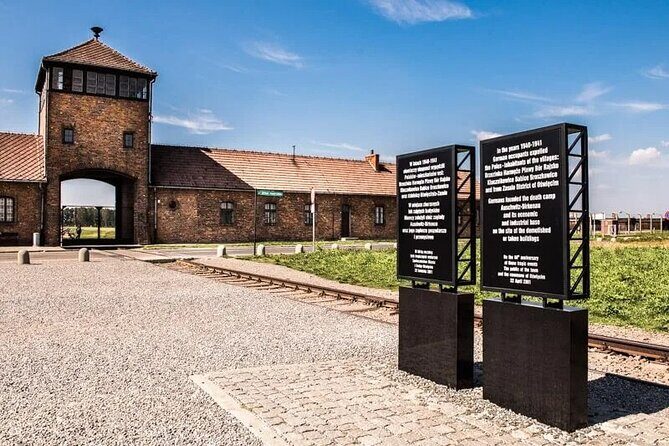
- English museum-guided time at Auschwitz I and Auschwitz II-Birkenau
- A later salt mine start (4 pm or 5 pm) with plenty of time underground
- Admission tickets and an offline-friendly PDF guidebook included
- Lift back up after your mine tour, but you still descend lots of steps
- Hard limit on bag size at the Auschwitz grounds
- Pickup confirmed by text/email the day before, with early departure from Krakow
Why This Auschwitz-Birkenau and Salt Mine Combo Day Works
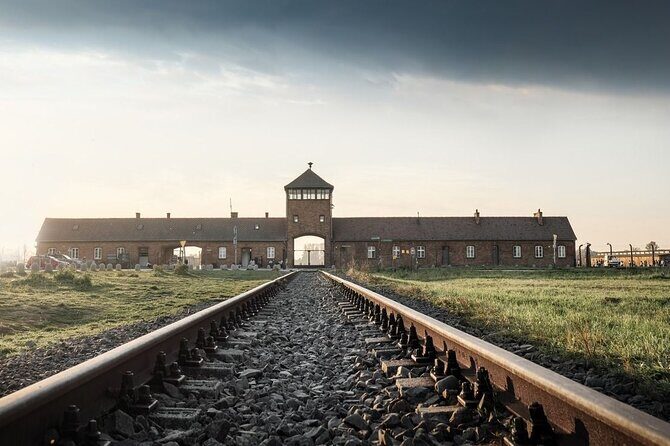
This is not a “see it, snap it, go” kind of day. It’s built around two places that feel totally different in tone. Auschwitz-Birkenau is solemn and tightly guided, with time at both Auschwitz I and Auschwitz II-Birkenau. Then you shift gears to Wieliczka Salt Mine, one of the oldest working salt mines in the world, where the wow-factor is the carving and the scale of the underground halls.
What makes the pairing work for your brain is the pacing. You start early for Auschwitz, when the day is cooler and the itinerary is more predictable. You finish with Wieliczka later in the afternoon, when you still have enough daylight time in Krakow and you’re not rushing through the mine experience.
I also like that the tour keeps language simple: English-guided at both Auschwitz and in the salt mine. That matters here. You will understand what you’re seeing, instead of guessing.
Other Auschwitz-Birkenau combo tours from Krakow
Morning Pickup in Krakow: Timing, Group Size, and Comfort
The day begins early. Your pickup window runs from 6:00 to 7:30 am depending on your accommodation and the day’s routing. In summer, pickups may start earlier (around 5:30 to 7:30) to avoid walking in full sun and heat. You’ll get your exact pickup time confirmed by text and email the day before.
If you’re staying inside Krakow city limits, pickup is free. If you’re outside the center, you can sometimes arrange pickup with an additional charge (the example given is 33€ from Krakow airport). If your hotel is in the Old Town or Jewish Quarter, you’ll be picked up directly from your place, but after the tour you may be dropped at the closest meeting point.
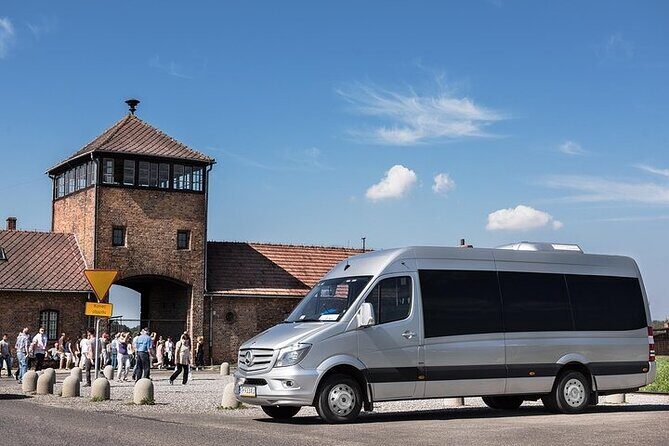
The vehicle is air-conditioned, and the tour runs with a maximum of 30 people in your group. There can be up to 90 travelers total across the overall operation, but you won’t be crammed into a massive bus with hundreds of strangers.
One more small comfort: there’s a documentary movie during the trip, if available. It’s not there to replace the museum tour. It’s more like a primer, helping you get oriented before you step into the sites.
Auschwitz I and Birkenau: How the Museum-Guide Format Feels
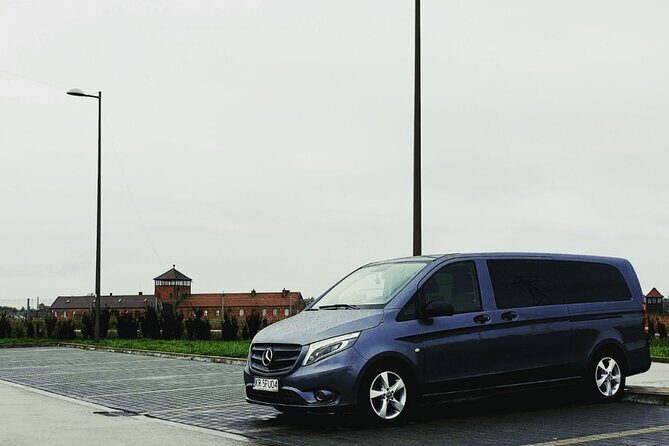
Your Auschwitz day is built in two parts, with the same English guide for both.
Auschwitz I (about 2 hours)
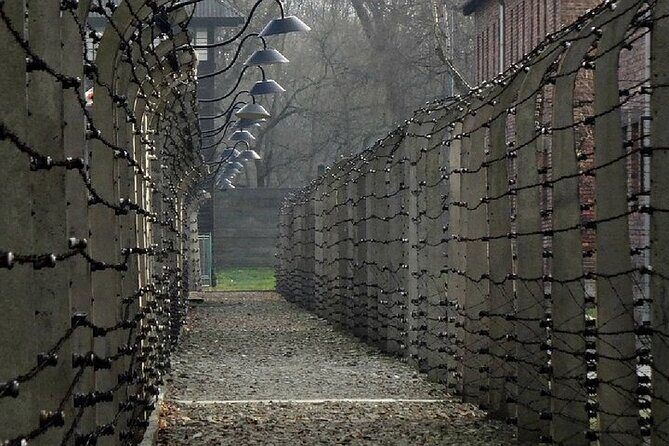
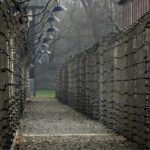
First you go to Panstwowe Muzeum Auschwitz-Birkenau for Auschwitz I. You join an English tour provided by the museum guide for about 2 hours. This is the place where you’ll get the “map in your head” version of what you’re looking at—how Auschwitz functioned, what the camp systems looked like, and what the museum wants you to understand while you’re there.
You also get the benefit of an official guide’s rhythm. On a site like this, you do not want to be filling in gaps with guesswork. The guide format keeps the story clear and time-efficient.
Transfer to Auschwitz II-Birkenau (about 1 hour)
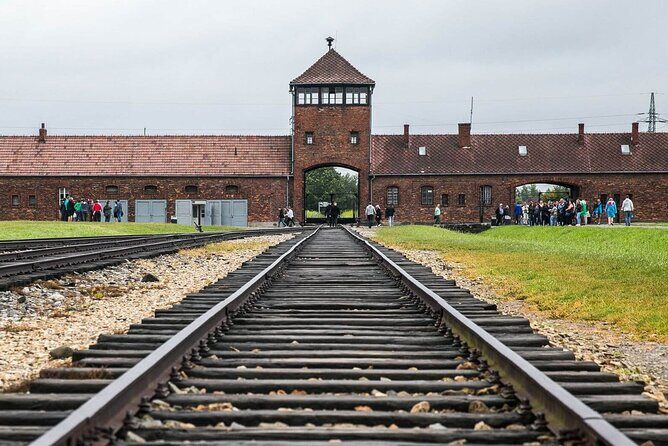
After that, you transfer to Auschwitz II-Birkenau, about 2 km away. You spend about one hour there with the same guide.
This part is intense in a different way. Birkenau is more open and spread out, so your sense of scale can hit you fast. One hour is not “everything there is to know,” but it is enough time to see the main layout and understand the conditions the museum highlights. It’s also a good length so you don’t run out of emotional and physical stamina before the day’s second half.
The day includes admission tickets (so you won’t be juggling ticket lines or currency while you’re trying to stay mentally present).
Other full-day and day trips in Krakow



Walking Rules at Auschwitz: Bags, Steps, and Cold Reality
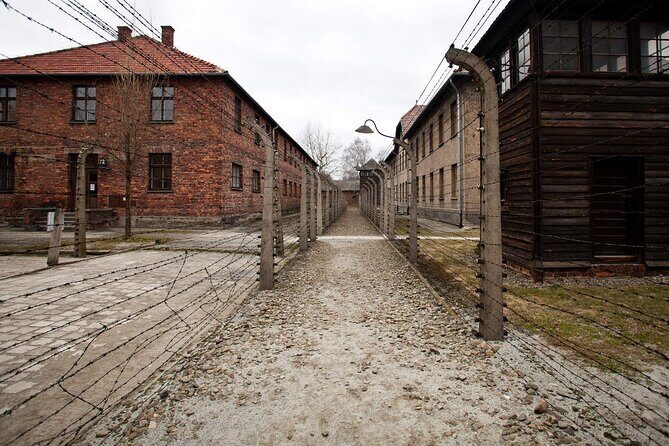
A tour can be “easy” on paper and still be hard in real life. Here’s the Auschwitz reality check.
There’s a maximum bag size of 30 x 20 x 10 cm allowed on the museum grounds. If you have a bigger backpack or suitcase, you can leave your belongings inside the bus, which is parked nearby. This is useful: you won’t be forced to lug your daypack through every section, but you should still travel light for comfort.
You should also expect cold, especially if you’re visiting in winter. One detail from real-life experience: visiting in late January can mean bitter temperatures. If you’re reading this in spring or summer, you might still be fine—just remember that mornings can feel colder than expected once you’re standing outside.
Finally, while this tour includes English guidance and structured timing, you still do a lot of moving between areas and you have to stay inside the group schedule.
Wieliczka Salt Mine at 4 pm or 5 pm: Underground Wonders Without the Guesswork
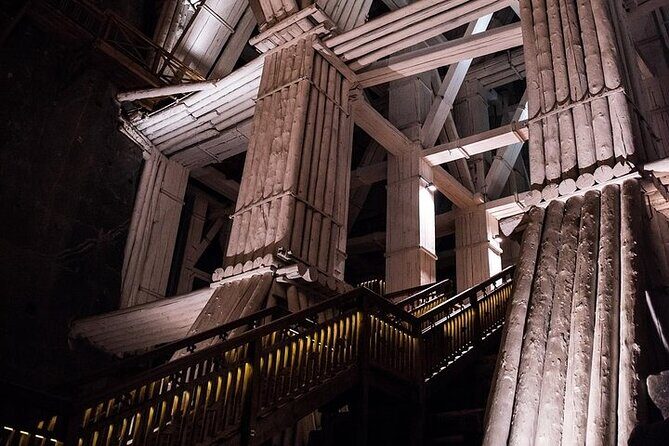
After Auschwitz, you’ll transfer to Wieliczka Salt Mine in the second part of the day. Your guided mine tour starts at 4 pm or 5 pm, depending on road conditions.
This is one of the reasons I like the structure: the salt mine tour isn’t first thing in the morning, so you’re less likely to feel like you’re touring two places back-to-back at the same mental intensity level. It’s still a big day, but it gives you a natural break.
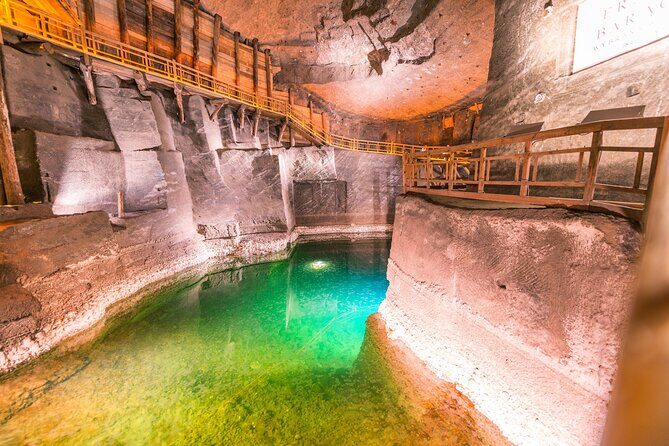
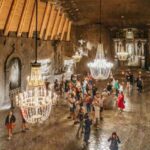
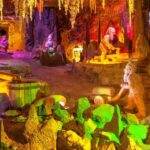
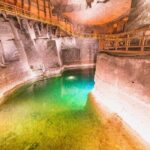
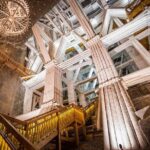
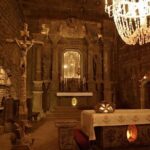
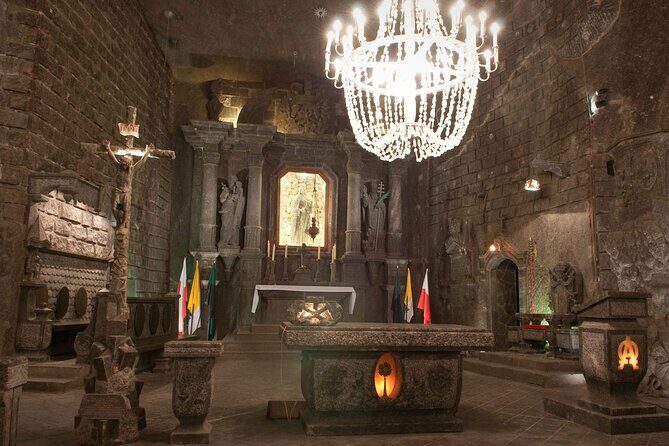
In the mine, you go up to 140 meters underground for a 2.5-hour guided journey on a 2.5-km tourist route. You’ll see chambers with salt carvings and statues—the kind of craft that’s hard to capture well in a photo because the scale and detail take a while to register.
Your guided route matters here. You’re walking through a moving, underground environment with regular transitions between chambers. A good guide helps you understand what you’re looking at and keeps you from feeling lost in the corridors.
Admission is included, and you don’t need to plan around buying tickets separately.
Stairs, Temperature, and What to Wear in the Mine
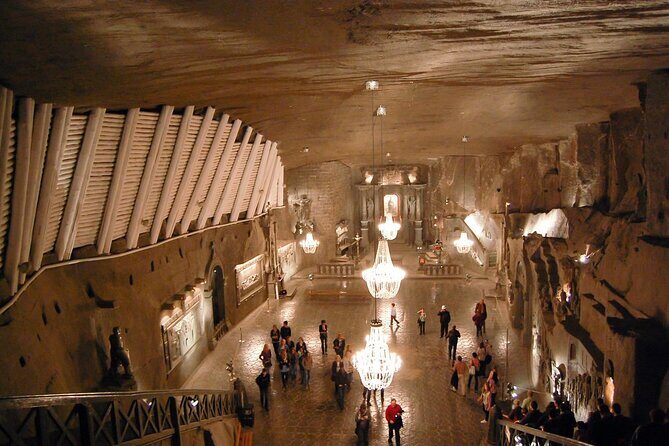
Wieliczka is famous for its underground halls, but your body experience will be mostly about cold air and stairs.
The temperature in the salt mine is about 14°C / 57°F. That’s cool enough to feel chilly if you’re dressed lightly. Wear warm layers and comfortable shoes.
You also descend a lot:
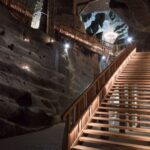
- To reach the first level (64 meters underground), you take a wooden stairway with 378 steps
- There are around 800 steps during the whole route
- After the tour, you go back up to the surface with a lift
So yes, there’s a light at the end of the stairs. But you should still take the descending seriously. If you have knee trouble or you’re not comfortable with step-heavy routes, this is the part to think about.
Also note the guide keeps the schedule. Don’t plan on stopping to rest whenever you want. You’ll have some breaks, but it’s still a set-route guided experience.
Price and Value: What You’re Paying For at $140.74
At $140.74 per person, you’re paying for a full-day combo that handles the expensive logistics for you: early pickup, two major destinations, transportation between sites, and museum-guided time in English. That’s usually where the cost goes in days like this.
Here’s where the value gets real:
- Admission tickets are included for both Auschwitz and the salt mine. That’s not a small line item.
- You get English-speaking guides for both main segments.
- You get a free PDF guidebook, which is handy for reviewing context later without carrying paper.
- You get door-to-door transportation within Krakow city limits, which saves time and stress.
The main “cost” to you is time and energy. This is a 10 to 12 hour day. You’ll be on the move, and the mine portion has a steep stair component. If you’re the type who hates long days, you might feel the price more than the money.
One small extra: coffee and/or tea are not included, so you’ll want to grab snacks in Krakow before you start or plan accordingly.
Who This Tour Fits Best (and Who Should Think Twice)
This tour is a strong fit if you want:
- One organized day with major Krakow-area highlights
- English guidance that helps you understand what you’re seeing
- A route that gives you time at both Auschwitz I and Birkenau, not just one quick stop
- A second-half activity that’s not another museum, but a guided underground tour with artistic craftsmanship
The tour calls for moderate physical fitness. “Moderate” here mainly means you should be comfortable with walking and a lot of steps—especially the mine descent.
It’s also built for people who want a group experience. The vehicle group size is up to 30, which feels manageable, and it reduces the friction of coordinating transport yourself.
If you hate stairs, have mobility limitations, or you’re traveling with limited ability to climb, you should think carefully about the mine’s 378 wooden stairs to the first level and the total step count. The lift helps on the way up, but the descent is still a big part of the experience.
Practical Tips That Make the Day Easier
Auschwitz and the salt mine each have their own “gotchas.” Here’s how to deal with both.
- Pack small. Keep bags within 30 x 20 x 10 cm for the museum grounds. If you’re over, plan to leave extra items on the bus.
- Dress in layers. Auschwitz can be cold, and the mine is around 14°C. Bring a warmer layer than you think you need.
- Wear comfortable shoes with real grip. You’ll be walking and climbing steps.
- Eat before you go. Coffee and tea aren’t included, and the day is long.
- Bring a small plan for phone charging. You’ll want your map and your notes, and the timing is early.
- Watch your group pace. The schedule moves: museum time, transfer time, and then the mine guided start at 4 or 5 pm.
And a small comfort tip: pickup time is confirmed by text and email the day before, so keep an eye on your messages. One helpful detail from real-life experience is that the pickup can be very punctual and organized, with drivers like Micheal coordinating departures smoothly.
Should You Book This Auschwitz-Birkenau and Salt Mine Day?
If you want an English-guided, well-timed day that covers Auschwitz I, Auschwitz II-Birkenau, and Wieliczka Salt Mine, this is an efficient way to do it without juggling tickets and transport. The biggest reason to book is the museum guide structure at Auschwitz and the included mine tour underground, with admission handled for you.
I’d book this if you can handle a long day and you’re okay with a lot of steps, especially underground. I would hesitate if stairs are a deal-breaker for your knees or mobility, because the mine route includes hundreds of steps even though there’s a lift up afterward.
Finally, remember the tone. Auschwitz is heavy. If that’s your first time visiting, go in knowing it’s designed to be emotionally and historically serious, not casual sightseeing. Then let the salt mine’s crafted underground rooms give you a breath of awe that feels different, but still worth your attention.
FAQ
What time does pickup happen in Krakow?
Pickups are provided between 6:00 and 7:30 am depending on your accommodation and the tour schedule. You’ll receive confirmation by text and email the day before.
What parts of the trip are guided in English?
Your tour includes an English-speaking guide for Auschwitz I and Auschwitz II-Birkenau, and an English-guided tour in Wieliczka Salt Mine.
Are admission tickets included?
Yes. Admission tickets are included for Auschwitz-Birkenau and for the Wieliczka Salt Mine tour.
How long are the Auschwitz and Birkenau visits?
You spend about 2 hours at Auschwitz I, then about 1 hour at Auschwitz II-Birkenau, for a total of around 3 hours in Auschwitz sites.
How long is the salt mine tour underground?
The Wieliczka Salt Mine guided tour is about 2.5 hours, including a route of around 2.5 km, descending up to about 140 meters underground.
What should I wear for the salt mine?
The mine temperature is about 14°C / 57°F, so bring warm layers. Wear comfortable shoes, because you’ll take many stairs on the descent.
What bag size is allowed at the museum grounds?
Bag size is limited to 30 x 20 x 10 cm. If your bag is larger, you can leave your belongings in the bus, which is parked nearby.